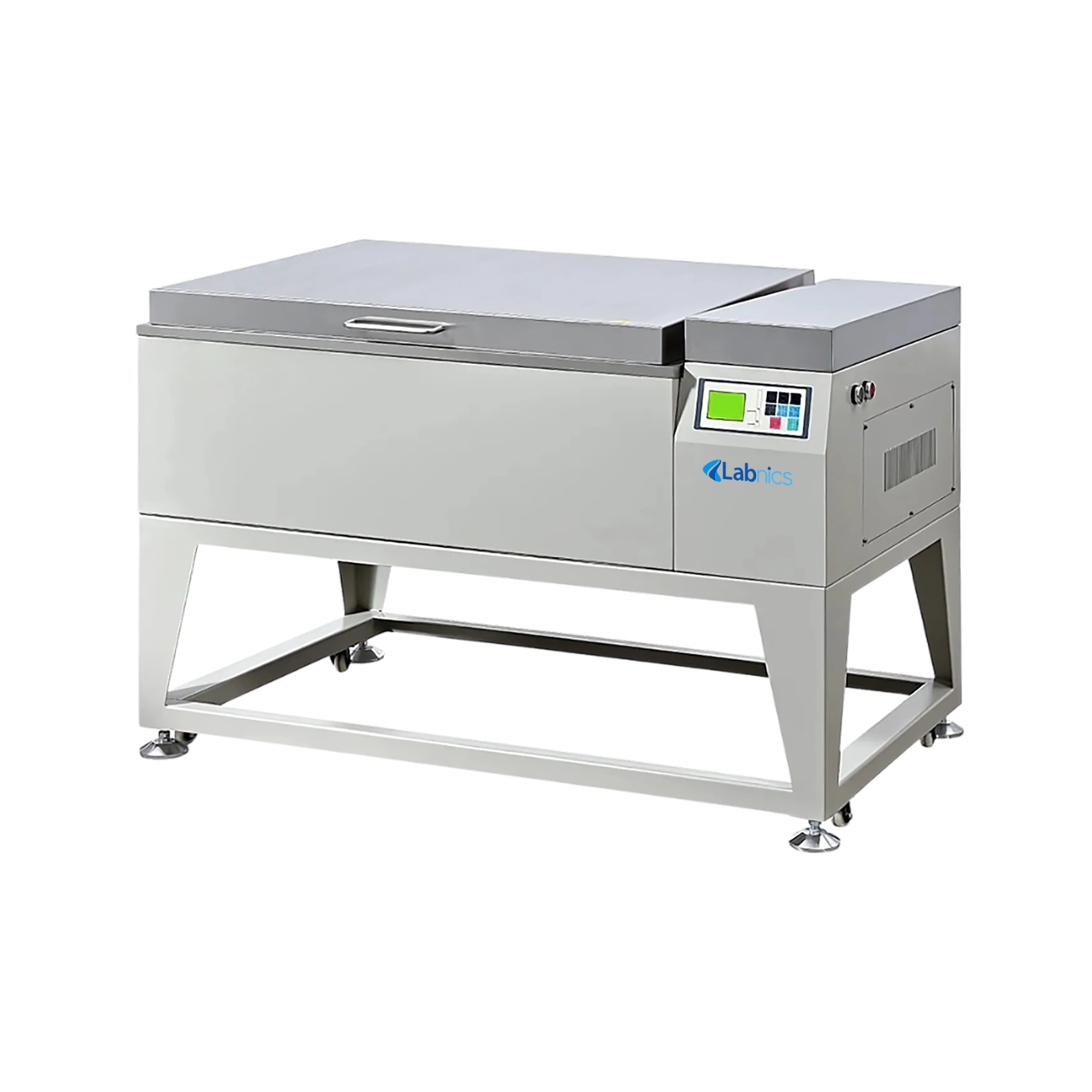
Shaker Water Bath NSWB-700 provides a 170-liter capacity to accommodate a wide range of sample sizes. It opens upward, allowing easy access to samples and convenient loading and unloading. This unit offers a 25 mm throw, ensuring efficient and uniform mixing of contents. It safeguards samples with a sensitive speed monitoring system to prevent damage. Our water bath displays all key parameters clearly on a large LCD screen for easy monitoring.
FAQ for Shaker Water Bath NSWB-700
1: How does the Shaker Water Bath NSWB-700 ensure safe operation?
Our Shaker Water Bath includes a sensitive speed monitoring system that automatically detects uncontrolled rotation and stops the unit to protect samples. It also features leakage and overcurrent protection to safeguard users.
2: Can I monitor multiple parameters easily?
Our Shaker Water Bath displays all essential parameters on a large, clear LCD screen, allowing users to view temperature, speed, and timing simultaneously. The user-friendly interface simplifies control and monitoring during experiments. This ensures experiments are run accurately without constant manual checking.
3: Is the construction durable and corrosion-resistant?
The Shaker Water Bath is built with a stainless-steel chamber and tray, along with durable mechanical components made of ductile iron. The 316L stainless steel provides resistance to acids, alkalis, and general corrosion. Optional anti-corrosion material shells further enhance longevity in demanding lab conditions.
4: How should I clean the Shaker Water Bath NSWB-700 chamber?
It is recommended to clean the chamber regularly using a mild detergent and a soft cloth to avoid corrosion. Users should avoid abrasive materials or harsh chemicals that could damage the stainless steel. Regular cleaning ensures consistent temperature performance and prolongs the unit’s lifespan.
5: How often should the water be replaced?
It is advisable to replace the water every 1–2 weeks, or sooner if contamination or cloudiness occurs. Using distilled or deionized water helps prevent mineral buildup. This maintenance step protects both the chamber and samples from impurities.