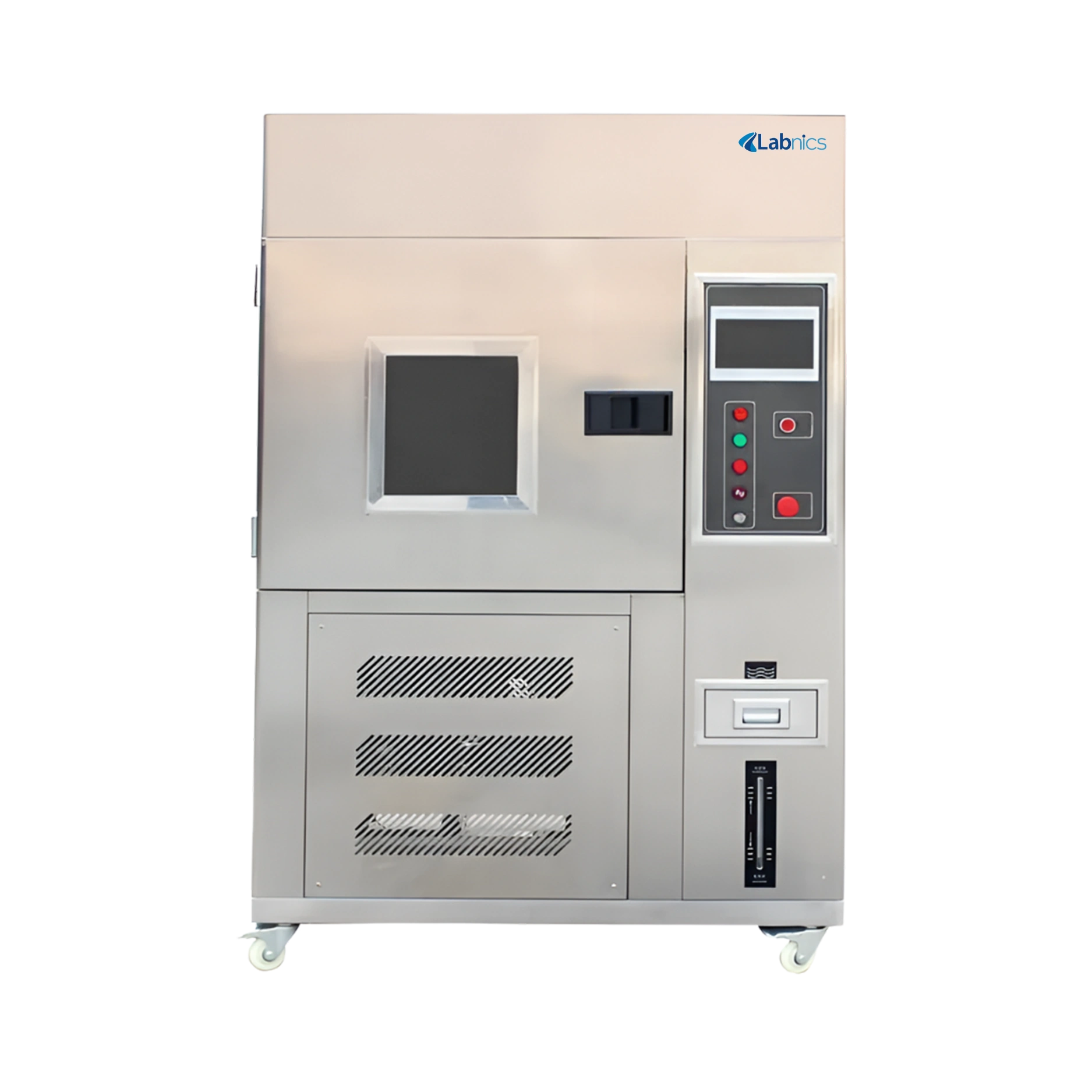
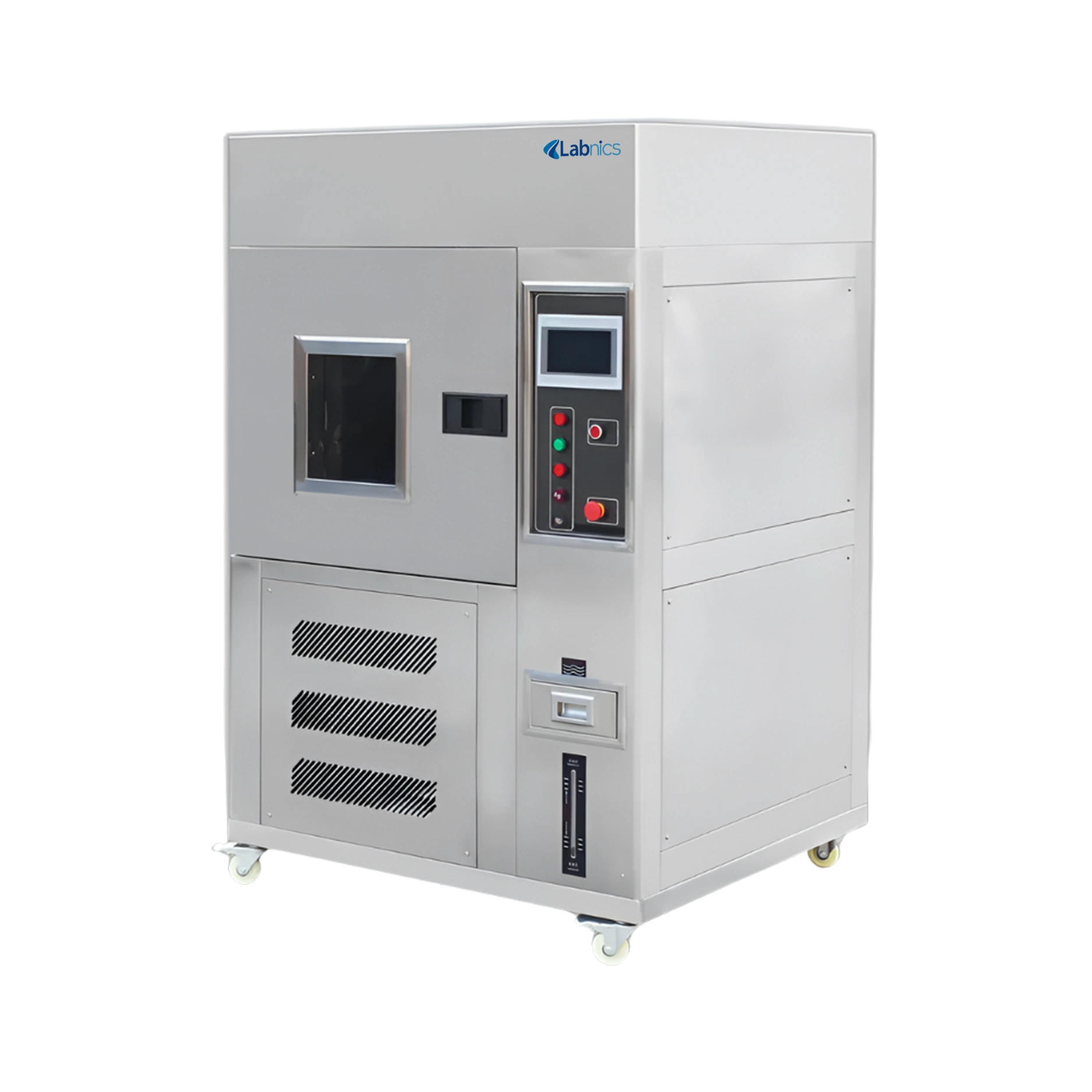
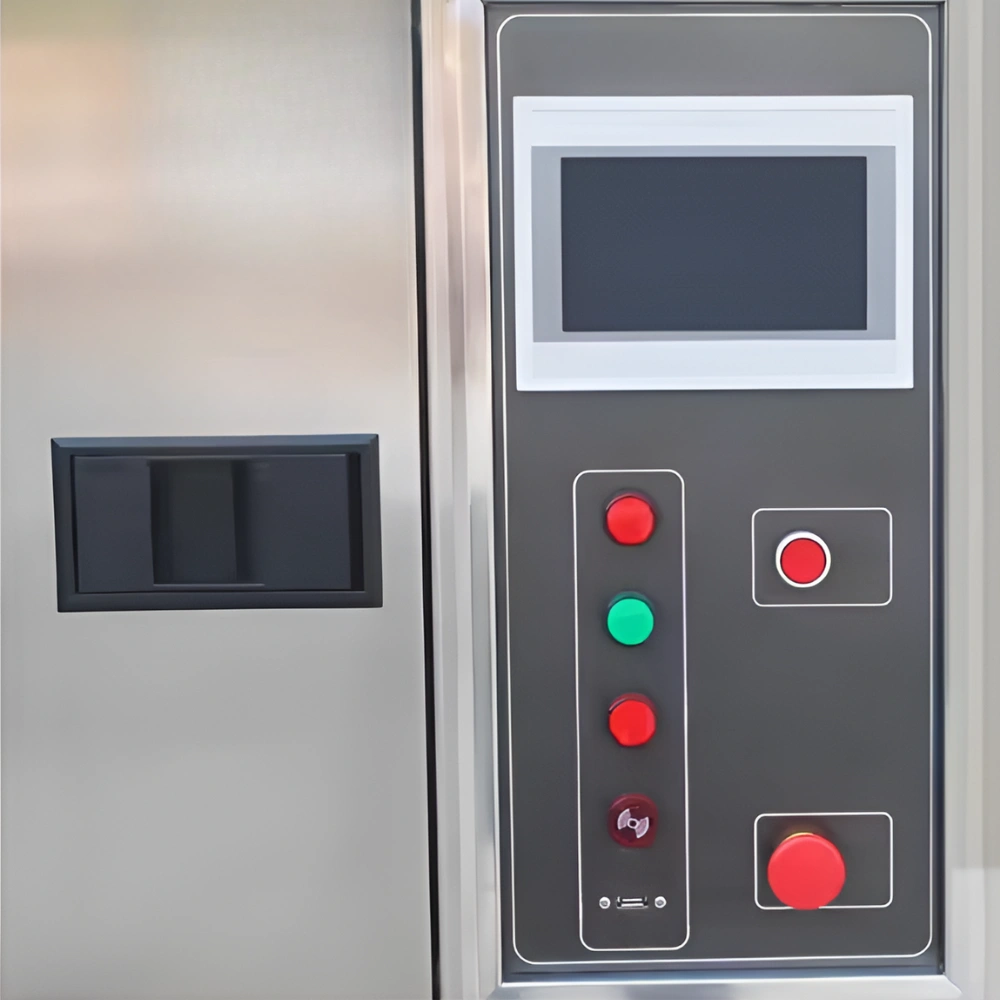
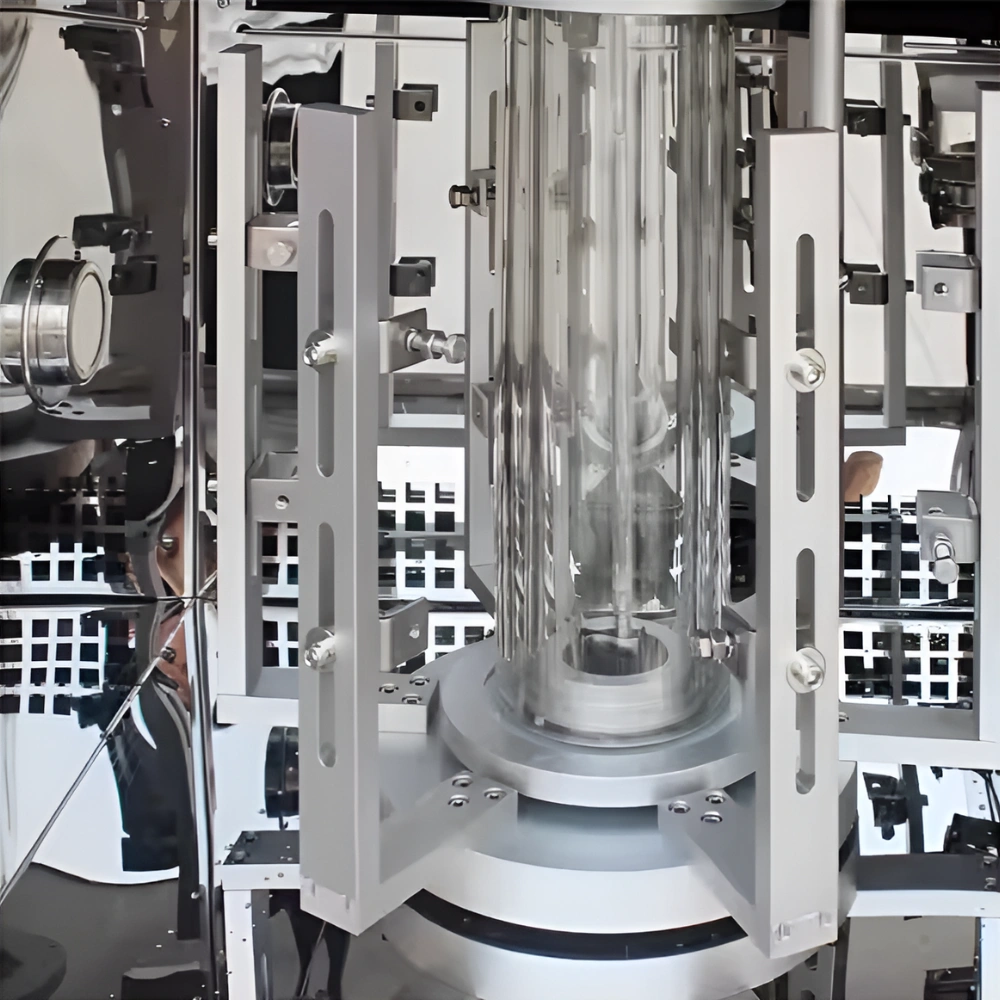
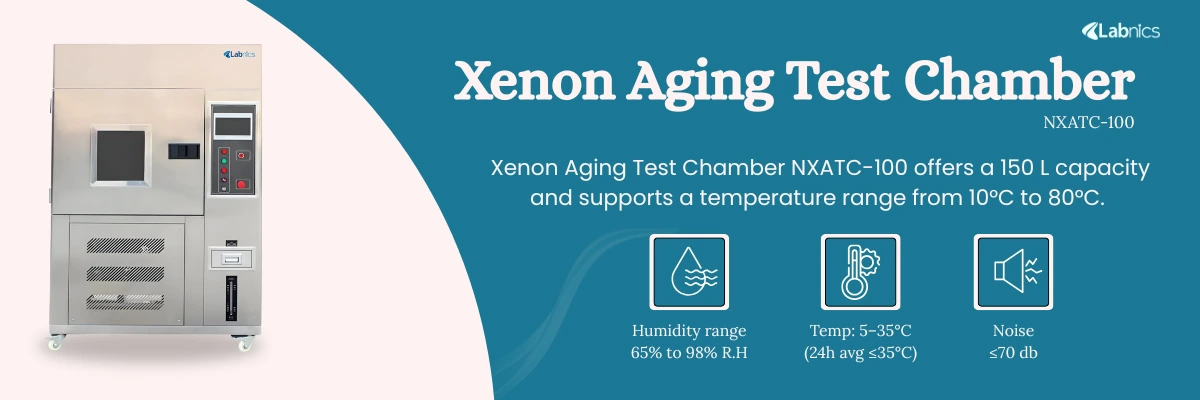
Xenon Aging Test Chamber NXATC-100 offers a 150 L capacity and supports a temperature range from 10°C to 80°C. It includes a radiation-resistant glass viewing window for safe observation. Our chamber uses a fully enclosed refrigeration compressor for stable and efficient cooling. It features stainless steel construction that enhances durability and resists corrosion. This unit is equipped with a colour touchscreen for easy operation and real-time monitoring.
FAQ for Xenon Aging Test Chamber NXATC-100
1: What materials are used inside the Xenon Aging Test Chamber for durability and insulation?
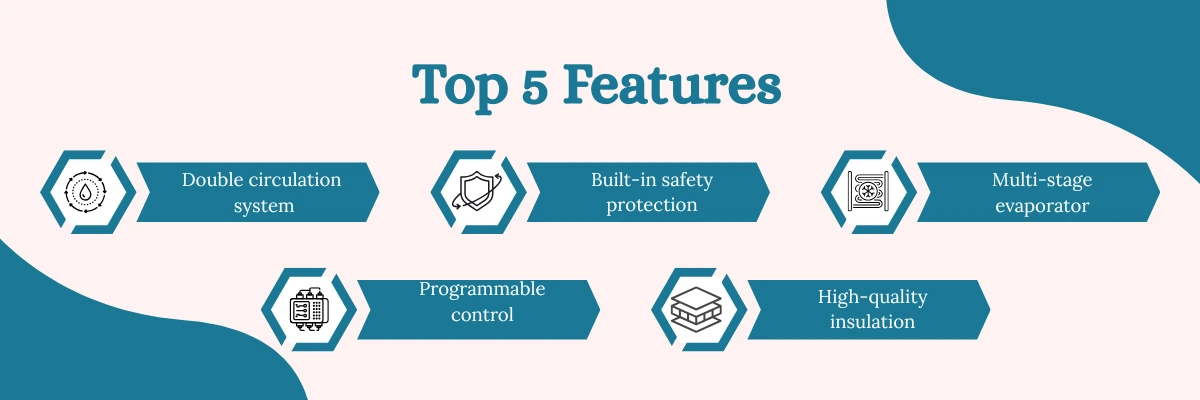
The inner chamber of the Xenon Aging Test Chamber is made of SUS304 anti-corrosion mirror stainless steel for strength and ease of cleaning, while high-quality ultra-fine glass fiber cotton insulation ensures temperature stability and energy efficiency.
2: How is temperature and humidity controlled in the Xenon Aging Test Chamber NXATC-100?
The Xenon Aging Test Chamber uses a double circulation air system with axial and centrifugal fans to maintain uniform temperature and humidity. It also has independent heating and external humidification systems for precise environmental control.
3: What maintenance is recommended for the Xenon Aging Test Chamber to ensure long-term reliability?
egular cleaning of air filters, checking the sealing materials, monitoring the water supply system, and inspecting electrical components and sensors are essential to keep the xenon aging test chamber operating efficiently.
4: What safety features does the Xenon Aging Test Chamber NXATC-100 include?
Our Xenon Aging Test Chamber is equipped with multiple protections such as fan overheating protection, refrigeration system overload and overpressure protection, over-temperature shutdown, water shortage alarms, phase loss protection, leakage protection, and automatic fault shutdown.
5: Can the Xenon Aging Test Chamber operate effectively at low humidity levels?
Yes, the Xenon Aging Test Chamber’s external humidification system enables dry operation at low temperatures, allowing precise control of low humidity conditions during testing.