| Type |
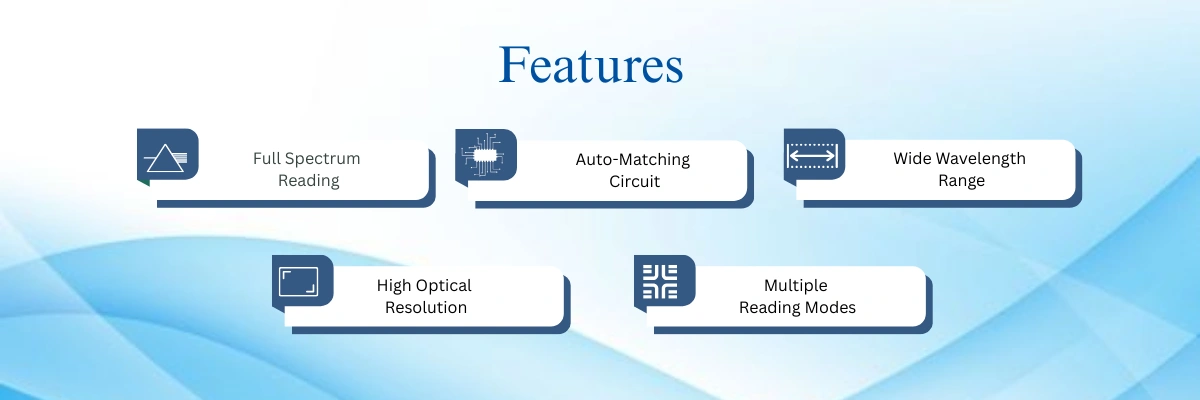
Full Spectrum Direct Reading ICP-OES |
| Wavelength Range |
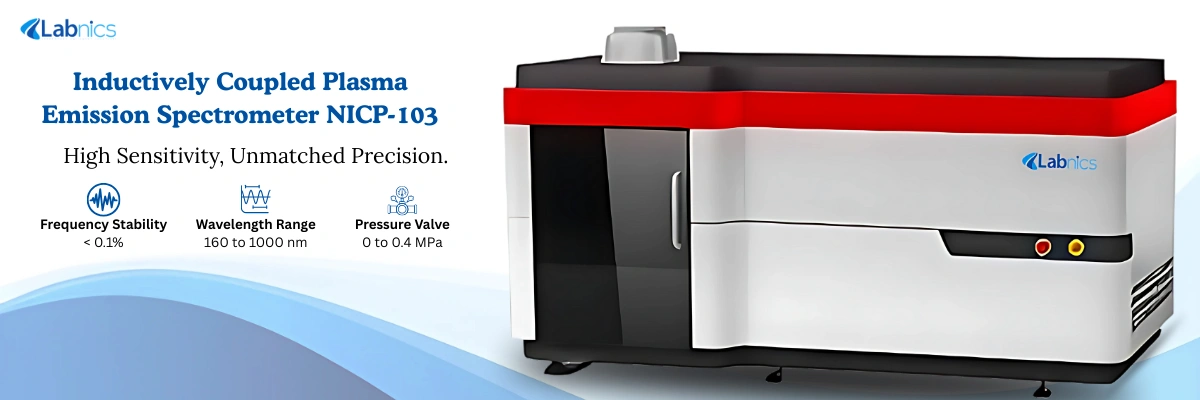
160 to1000 nm |
| RF Power Circuit |
Solid-state RF power supply with auto-matching |
| RF Frequency |
27.12 MHz ± 0.05% |
| Frequency Stability |
< 0.1% |
| Power Output Stability |
< 0.3% |
| Escaped RF Radiation |
30 cm away, Electric field E < 2 V/m |
| Sampling System |
Torque tube: Three concentric, OD 20 mm |
| Torch Working Coil |
Inner diameter: 25 mm |
| Nebulizer |
Coaxial type, Outer diameter 6 mm |
| Spray Chamber |
Double-barrel atomizing chamber, OD 34 mm |
| Gas Flow Control |
Plasma Argon: 100 to1000 L/h
Auxiliary Argon: 10 to 100 L/h
Carrier Argon: 10 to 100 L/h |
| Pressure Valve |
0 to 0.4 MPa |
| Cooling Water |
Temp: 20 to 25°C; Flow: > 5 L/min; Pressure: > 0.1 MPa |
| Grating |
Middle step grating, 52.67 lp/mm, 64° sparkle angle |
| Numerical Aperture |
Fs 8 |
| Resolution |
0.0065 nm at 200 nm |
| Astigmatism |
< 2 ppm at As 189.042 nm |
| Light Chamber |
Constant temperature: 35 ± 0.1°C; Nitrogen purging: 1.8 to 3.8 L/min |
| Detector |
27.6 mm × 27.6 mm, 1024 × 1024 detection units |
| Reading Mode |
NDRO, FF, RAI |
| Power Consumption |
800 W to 1500 W |
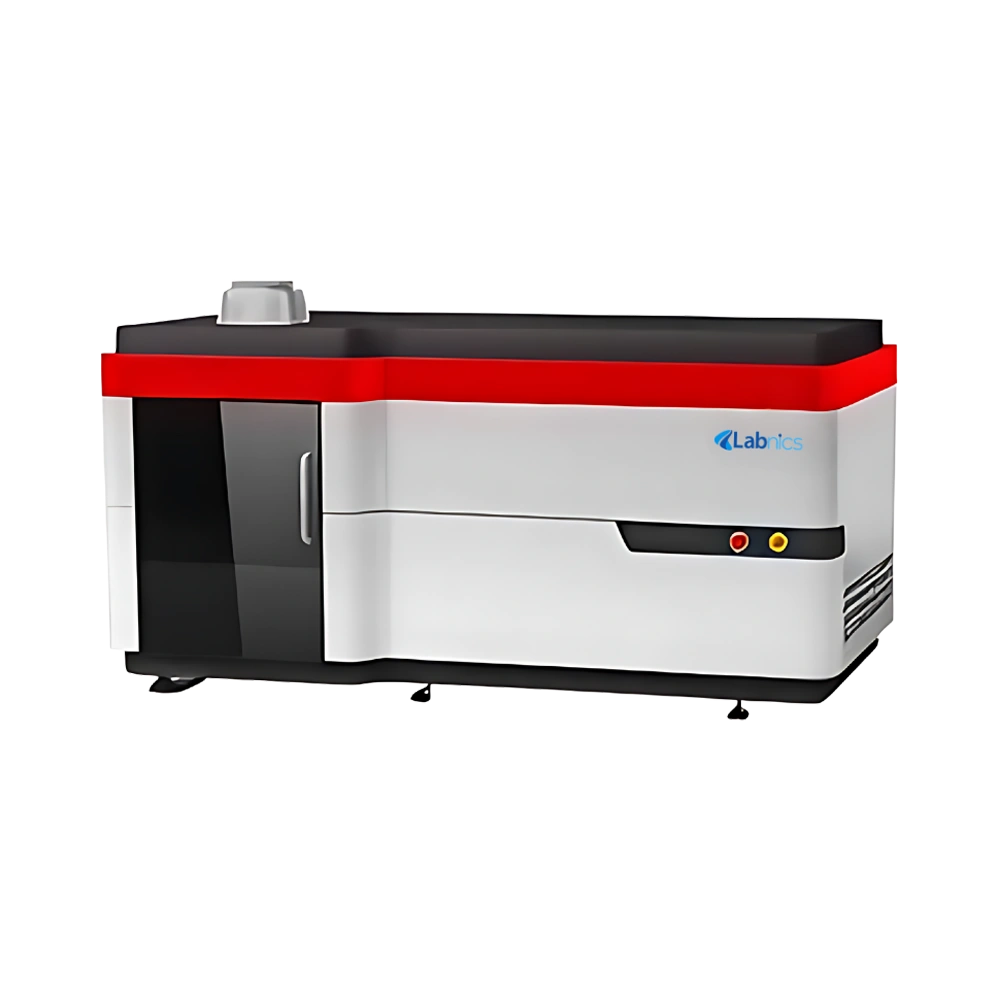
FAQ for Inductively Coupled Plasma Emission Spectrometer NICP-103
1: How does the nitrogen-purged optical chamber improve performance in the Inductively Coupled Plasma Emission Spectrometer NICP-103?
The nitrogen-purged design in Inductively Coupled Plasma Emission Spectrometer NICP-103 minimizes interference from moisture and oxygen, maintaining optical stability and enhancing sensitivity for precise elemental detection.
2: Why is auto-matching RF technology important in the Inductively Coupled Plasma Emission Spectrometer NICP-103?
Auto-matching RF technology in Inductively Coupled Plasma Emission Spectrometer NICP-103 ensures consistent power delivery to maintain plasma stability, reducing downtime and improving accuracy during prolonged analytical sessions.
3: What advantage does the full-spectrum direct reading offer in the Inductively Coupled Plasma Emission Spectrometer NICP-103?
Full-spectrum reading in Inductively Coupled Plasma Emission Spectrometer NICP-103 allows simultaneous detection of multiple elements, saving time and ensuring comprehensive analysis with high accuracy in a single run.
4: How does constant temperature control affect the results in the Inductively Coupled Plasma Emission Spectrometer NICP-103?
Inductively Coupled Plasma Emission Spectrometer NICP-103, maintaining a stable optical chamber temperature (35 ± 0.1°C), prevents wavelength drift and ensures reliable performance for both routine and advanced analyses.
5: What are the benefits of multiple reading modes like NDRO and RAI in Inductively Coupled Plasma Emission Spectrometer NICP-103?
Non-destructive and flexible reading options in Inductively Coupled Plasma Emission Spectrometer NICP-103 enhance data integrity, reduce sample loss, and improve overall operational flexibility for different analytical workflows.